
Can We Really Have It All?
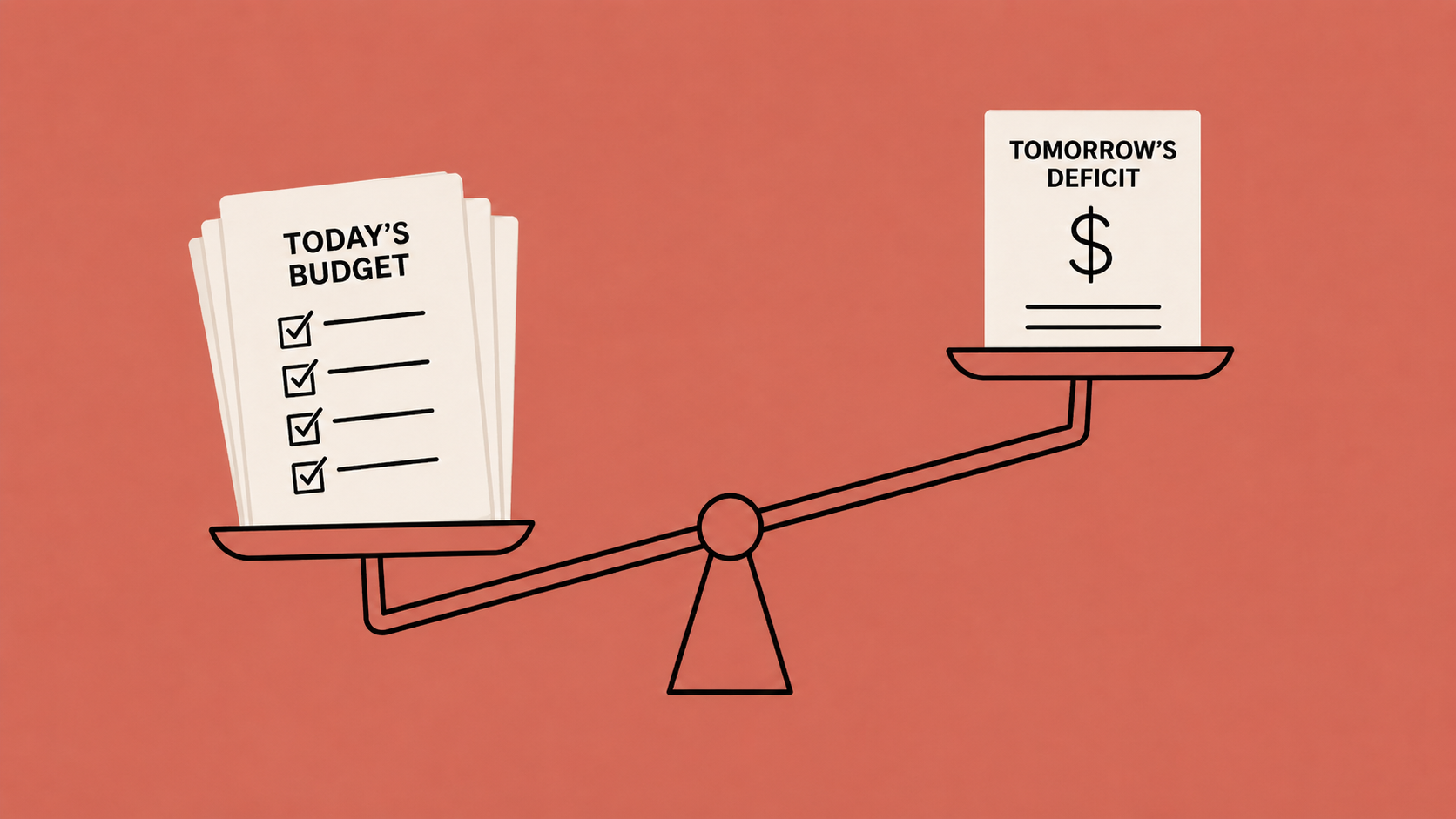
What are we trading off on to maintain a structural deficit of ~$300 million?
A different read on the May 15 budget vote.
At a Glance
The vote: On May 15, the County Council reached a 9–2 preliminary agreement on a $7.9 billion FY27 budget. The final vote is scheduled for May 21.
What I think happened: The Council found a way to give almost every constituency something this year. The arithmetic does not work next year.
My position: We cannot have it all. We can be honest about what we are buying and why, or we can keep coming back to this fight every March on harder terms.
Earlier this month I wrote about why the proposed 6.3-cent property tax rate increase was wrong.[1] On May 15 the Council voted it down. That was the right call. The story most people heard was "Council rejects tax increase." That is not what happened.
Here is what the Council actually did with their straw vote:
It repealed the $692 Income Tax Offset Credit (ITOC): A homeowner-only credit that approximately 80,000 households claim each year. Eliminating it raises about $140 million. Maryland state law does not let counties set different rates for residential and commercial property, so commercial owners pay nothing extra. The full burden falls on homeowners.[2]
It adopted a three-bracket progressive income tax: 2.7 percent under $50,000, 3 percent up to $150,000, and 3.3 percent above. Most filers see a cut from the current 3.2 percent flat rate. This is a real and meaningful progressive change.[3]
It raised the solid waste service charge: The fee on single-family homes is now $15.62, which is $6.51 more than the County Executive proposed.[4] Solid waste fees are not income-tested; they land on every household.
Budget balancing: It increased the inflationary adjustment for nonprofit contracts from 2.5 percent to 3.5 percent. It funded MCPS at $143 million above last year and $35 million below the Board of Education's request. It cut county government by more than $100 million to make the rest balance.[5]
Two council members voted no. Andrew Friedson, who is running for County Executive and whose budget views I do not share on every point, named the FY28 structural deficit at $293 million.[6] Most of his colleagues declined to engage with that number.
The Pattern: Deferring the Deficit
Every line item in the budget has a constituency. Schools have parents. Nonprofits have boards and the people they serve. County employees have unions. Federal workers facing displacement have us. The structural deficit has no constituency until it bites, and when it bites, it hits whoever is most exposed.
The result is a budget that says yes to almost everyone this year by deferring the "no" to next year. The Council closed this year's gap with a one-time ITOC revenue shift, a $25 million draw from the retiree health benefit trust, and a $182 million reserve draw.[7] None of those dollars exist next March. The expenses do.
Some will read this as an argument for a smaller government. It is not. It is an argument for a government that knows what it is buying and why, because that is the only way to defend the spending that matters most. A budget that funds everything by deferring the bill ends up cutting everything at once.
That is what just happened to Maryland State. In May 2025, Moody's downgraded the state from AAA to Aa1, the first downgrade in over fifty years. Two weeks earlier, Moody's downgraded the District of Columbia for the same reason. The cause in both cases was the same: structural deficits closed with one-time money.[8] Montgomery County still holds AAA from all three rating agencies, a streak going back to 1973. S&P's stated reason for the rating is the county's expected ability to "make the necessary adjustments to maintain structural balance."[9] That is the standard. The May 15 vote suspended it.
We are not too poor to plan ahead. We are too unwilling.
Two Changes That Would Actually Help
1. Grow the base honestly.
The only sustainable way to expand county services is to expand the economy that funds them. Montgomery County is home to one of the most promising life sciences corridors on the East Coast and to 18 federal agencies. We also lost 9,900 federal jobs in 2025, more than any county in the country.[10] The talent base is not theoretical. A county with a serious workforce transition program and an active employer outreach office can absorb that expertise into a more durable, more diversified tax base.
2. Treat every line item as competing with every other one.
Before adding new spending, we owe residents a careful review of what we already spend. Three places I would start:
Vendor contracts and recurring subscriptions: A budget this size accumulates expenses no one re-examines.
Communications and public relations: Departments and agencies have built up communications staffing and outside contracts over time without consolidation.
Nonprofit grants: The county routes a significant share of its budget through nonprofits. Some is essential; some duplicates other programs; some has not been measured in years. Residents currently cannot get a complete list of which organizations are funded and at what level.
A government that cannot tell its residents where the money goes has not earned the right to add another half-percent on top.
What Comes Next
The residents I meet across District 4 are not anti-tax in principle. They are tired of a pattern. Every March, the bill comes. Every March, the same constituencies defend their share. Every March, no one defends the residents who pay for all of it.
Discipline is not a smaller government. It is a government that knows what it is buying and why. That is the only way to keep the spending that matters most. Maryland State just learned this lesson. We can learn it now, or we can learn it later.
Sources
[1] "Grow the Tax Base, Don't Raise the Bill," paulaformoco.com, May 12, 2026.
[2] Statement from County Executive Marc Elrich on the Council Straw Vote, May 15, 2026; Bethesda Magazine, May 15, 2026; MoCo Monitor, May 15, 2026.
[3] Montgomery County Council press release, May 15, 2026; Bethesda Magazine, May 13, 2026.
[4] Montgomery County Council Transportation and Environment Committee staff report, May 2026; Council press release, May 13, 2026.
[5] Councilmember Kate Stewart, statement on the FY27 Operating Budget and Amendments, May 15, 2026.
[6] Councilmember Andrew Friedson, statement on the FY27 Operating Budget and Amendments, May 15, 2026; MoCo Monitor, May 15, 2026.
[7] Montgomery Perspective, "The Kicking the Can Budget," May 15, 2026.
[8] Maryland Matters, "Maryland loses coveted Aaa bond rating," May 14, 2025; The Baltimore Banner, "Moody's downgrades Maryland's credit rating for first time in decades," May 14, 2025.
[9] Montgomery County press release, "Montgomery County Secures 'Triple-A' Bond Rating for 52 Consecutive Years," 2024; Montgomery County Department of Finance, Debt Management Program.
[10] Maryland Department of Labor; Montgomery Community Media, "Federal job losses hit Maryland hardest in U.S.," January 8, 2026; U.S. Bureau of Labor Statistics, 2026.